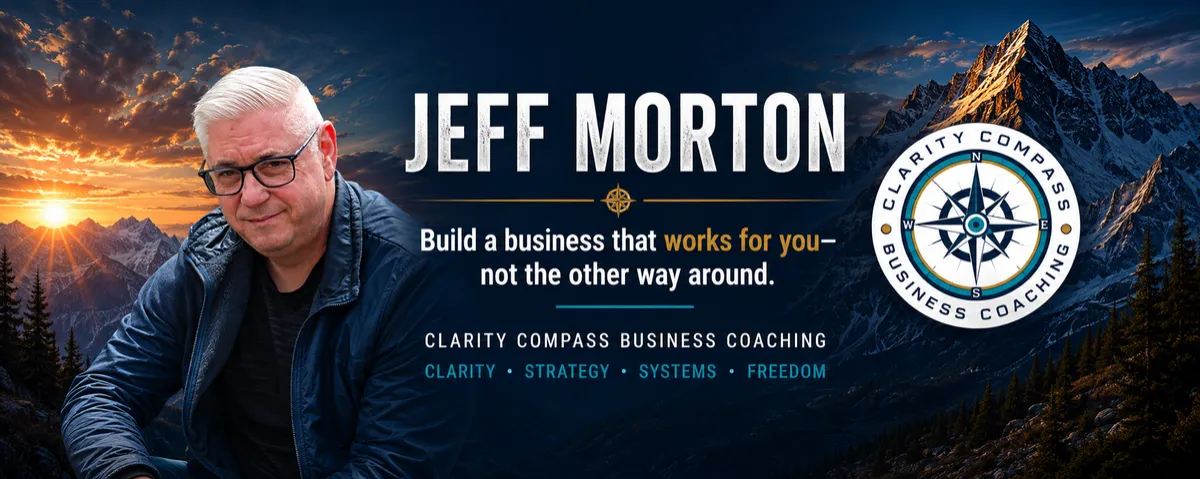
Imagine knowing what is actually keeping your business from producing the results you want—and knowing what deserves your attention next.
When your business gets harder to manage, working harder isn't always the answer.
Sometimes the real challenge is figuring out what's actually happening, what matters most, and what needs your attention now.
That's where we start.
WHEN THE BUSINESS GETS HARDER TO MANAGE
Something Needs to Change.
But What?
You're working hard. You're making decisions. You're solving problems. But somehow, the business isn't getting easier to run.
Everything feels important.: Customers need attention. Employees have questions. Sales matter. The numbers matter. Problems keep showing up. When everything competes for your attention, it becomes difficult to see what actually deserves it.
You keep solving the same kinds of problems: You fix what's in front of you and keep moving. But when the same problems return, the visible problem may only be a symptom of something underneath it.
The business depends too much on you: Decisions, customer issues, employee questions, and important work keep finding their way back to you. Too much of the business still requires your time and attention.

1-on-1 Business Coaching
A Clearer View of Your Business
I work one-on-one with small-business owners who have built something real, but the business has become harder to manage and the path forward isn't as clear as it once was.
My job isn't to hand you a generic playbook or tell you how your business should work. We look at what's actually happening, where you want the business to take you, and what's getting in the way.
I've spent much of my working life building and operating businesses myself. I know what it's like to make decisions when the answer isn't obvious, the numbers don't tell the whole story, and the consequences belong to you.
Coaching gives you a place to step outside the day-to-day noise, think through those decisions with someone who understands business ownership, and turn greater clarity into meaningful action.
Jeff Morton
Founder & Business Coach, Clarity Compass
HOW WE WORK TOGETHER
Clarity Before Action
Good advice isn't very useful if it solves the wrong problem.
We start by understanding what's actually happening in your business, where you're trying to go, and what is getting in the way.
Then we decide what deserves your attention and turn that clarity into meaningful action.
Get Clear on What's Actually Happening
We look beyond the most obvious symptoms to understand what's happening in the business, what has changed, and what results you actually want.
Identify What Matters Most
Once we understand the situation, we determine what deserves attention now—including the choices, consequences, and tradeoffs involved.
Turn Clarity Into Meaningful Action
We decide on the next reasonable action, put it into practice, observe what happens, and use what we learn to decide what comes next.
CONFIDENTIAL STRATEGY SESSIOREADY TO TALK?
Let's Talk About Your Business
You don't need to have everything figured out before we talk.
Tell me what's happening in your business, where you're trying to go, and what's getting in the way. We'll start there.
BUILD A BUSINESS THAT WORKS FOR YOU—NOT THE OTHER WAY AROUND.


© 2026 Clarity Compass. All rights reserved.